
When we think of French cuisine, images of luxury, meticulous preparation, and complex flavors often come to mind. However, before we arrive at the renowned main course, there is a “first door” that must be opened to awaken the palate and set the tone for the entire meal: the Hors-d’œuvre (pronounced or-derv).
In this blog, Aimée Petit Bistro invites you to explore the history, culture, and evolution of these French appetizers. More than just a snack to curb hunger, the hors-d’œuvre is a culinary art form. We will also introduce the unmissable appetizer menu at our bistro, perfect for those seeking an authentic French restaurant or a romantic spot for a special anniversary in Rangsit.
What is a Hors-d'œuvre?
The term is a French compound word where:
- Hors means “outside.”
- Œuvre means “work” or “masterpiece” (referring to the main course).
Literally translated as “outside the work,” this term historically referred to small dishes served prior to, or apart from, the chef’s main heavy dishes.
The chef’s primary goal in serving hors-d’œuvre is not to fill the stomach, but to awaken the palate. Hors-d’œuvre menus are designed to stimulate the appetite, preparing diners for the richer flavors to come. Furthermore, it serves a social function, creating a relaxed atmosphere where guests can mingle, chat, and enjoy light drinks before the formal meal begins.
A Brief History of The “Starter”
The culture of French starters did not appear overnight; it has roots in ancient traditions of small-plate dining that have evolved over centuries.
The "Interlude" of Rome and the Middle Ages
In the traditions of Ancient Rome, meals began with Gustatio—a selection of eggs, salads, pickles, or oysters designed to stimulate digestion. By the Middle Ages in Europe and France, this evolved into Entremets (literally “between servings”). These were often elaborate, decorative dishes served between courses to entertain guests and display the host’s wealth and social status.
The Turning Point: The 19th Century
A major shift occurred in how food was served, which defined the modern appetizer:
- Service à la française (French Service): Historically, all dishes were placed on the table simultaneously, meaning hors-d’œuvres were just one part of a crowded table.
- Service à la russe (Russian Service): In the 19th century, France adopted the Russian style of serving meals course-by-course. This elevated the hors-d’œuvre to the official “First Course,” allowing guests to enjoy specific flavors while waiting for the main dishes to be prepared in the kitchen.
Types of French Appetizers
Generally, hors-d’œuvre are categorized by serving temperature:
- Hors-d’œuvre Froids (Cold): Served chilled or at room temperature. Examples include Pâté, Terrine, Smoked Salmon, or Tartare.
- Hors-d’œuvre Chauds (Hot): Served fresh from the oven or pan. Examples include Escargots, Pan-seared Foie Gras, or Quiche.
French Dining Culture: L'Apéritif, Amuse-Bouche, and The Entrée
If you have the chance to visit a fine French restaurant, you will likely encounter specific terminology reflecting the nuances of French dining culture:
L'Apéritif (L'Apéro)
You cannot discuss French dining without mentioning the drink. “L’Apéro” is a cherished tradition, usually occurring between 6:00 PM and 8:00 PM. It is the “Golden Hour” where friends and family gather for light alcoholic beverages like Champagne or white wine, accompanied by small finger foods or Canapés. The goal is not intoxication, but conversation and appetite stimulation.
Amuse-bouche
Literally translating to “Mouth Amuser,” these are bite-sized morsels often served complimentary by the chef before the meal begins. It is a gesture of hospitality and a way for the chef to showcase their style and technique while gently waking up your taste buds.
L'Entrée (The Confusion)
In modern France, L’Entrée means “The Entrance” or Starter/Appetizer. This is important to note for English speakers, particularly from North America, where “Entrée” often refers to the Main Course. At authentic French bistros, if you order an Entrée, you are ordering the appetizer!
5 Must-Try French Appetizers at Aimée Petit Bistro

If you are looking for an authentic French culinary experience without flying to Paris, Aimée Petit Bistro Rangsit is ready to serve you. We offer “Casual Luxury”—warm, bistro-style comfort with premium execution, right here in Bangkok. Here are our top 5 recommended starters:
1. Escargot au Beurre Persillé (Snails in Garlic Butter)
A timeless classic. We import premium Escargots from Burgundy, known for their perfect texture. They are baked in hot ceramic dishes with aromatic garlic butter and parsley. The scent alone is intoxicating. Pro tip: Dip your bread into the leftover butter in the shell—it’s the best part!
2. Foie Gras Poêlé (Pan-Seared Foie Gras)
Premium duck liver is seared to perfection—crispy and caramelized on the outside, meltingly soft and buttery on the inside. We serve it with garlic bread and a homemade Mango Chutney. The sweet and sour notes of the fruit cut through the richness of the liver, creating a perfectly balanced bite.
3. Tartare de Boeuf au Couteau (Knife-Cut Beef Tartare)
For lovers of fresh ingredients, this is the ultimate test of quality. We use tenderloin beef, hand-cut with a knife (not machine-ground) to preserve the texture and juiciness. It is seasoned with traditional spices and served with crispy bread. A dish dedicated to true beef connoisseurs.
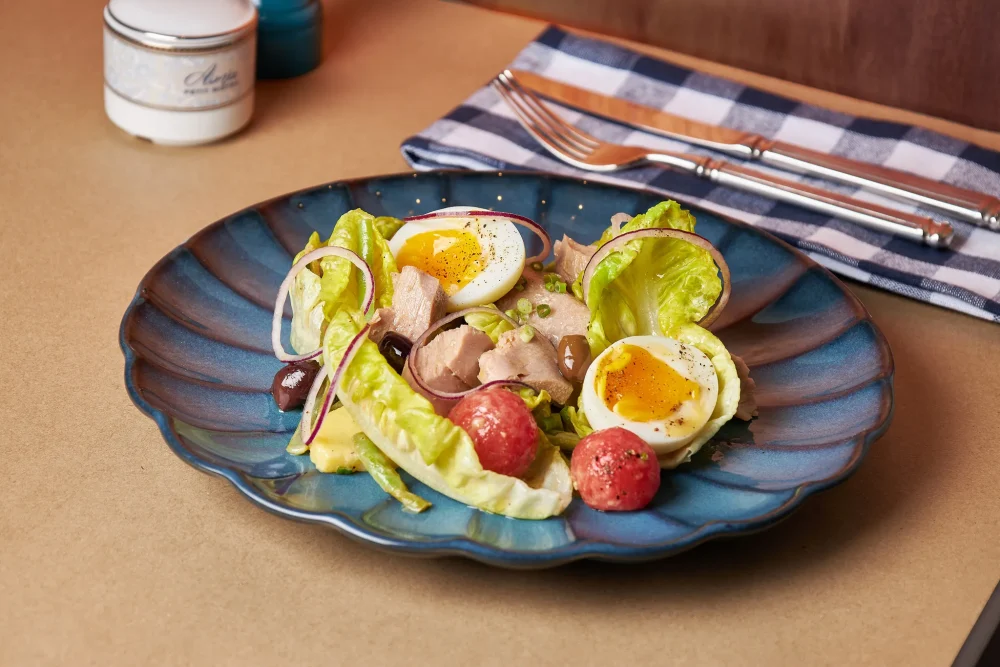
4. Salade Niçoise
A famous classic from the city of Nice in the south of France. At Aimée Petit Bistro, we elevate this dish using Akami Tuna (lean, flavorful red meat), slow-cooked to retain moisture. It is served with potatoes, green beans, iceberg lettuce, black olives, and a zesty lemon dressing. A refreshing start to any meal.
5. Huître Fine de Claire (Premium Oysters)
Imported directly from France, these oysters are finished in special shallow clay ponds called “Claires.” This process gives them a unique flavor profile: a touch of saltiness from the sea, a hint of sweetness, and a distinct nutty note. Served simply with lemon and a shallot-vinegar mignonette sauce.
An appetizer in French culture is not just a dish to start a meal; it is the start of an experience. It is an art form that blends flavor, aroma, and atmosphere to prepare you for the joy of the courses to follow.
Whether you are a French food enthusiast, looking for a romantic spot for an anniversary, or simply celebrating a special occasion, Aimée Petit Bistro Rangsit welcomes you.
Aimée Petit Bistro: Authentic French Restaurant in Rangsit

For those seeking a French restaurant in Rangsit offering a luxurious experience, Aimée Petit Bistro is the perfect answer. We offer authentic French dining experiences in a Parisian bistro atmosphere that perfectly blends warmth with luxury from simplicity.
Our classic French menu is prepared using traditional techniques with contemporary adaptations. Our experienced chef carefully selects quality ingredients, both local and imported, to create dishes with perfect flavor balance that leave lasting impressions. As a premier French restaurant in Rangsit, we pride ourselves on accessibility without compromising on quality.
With a convenient location inside Novotel Bangkok Future Park Rangsit, offering easy access, parking facilities, and privacy, Aimée Petit Bistro is the perfect choice for those seeking an authentic French restaurant, either for a good meal or to celebrate a special occasion.
For more information, please contact
Tel.: 02-520-2525 or 02-520-2526
LINE Official: @novotelfuturepark
Website: www.aimeepetitbistro.com
Aimée Petit Bistro opens daily, from 11:30-14:30 hr. and 17:30-22:30 hr.