
In the pantheon of Western gastronomy, few dishes evoke the same sense of refined taste as “Foie Gras.” Revered as a cultural and gastronomic heritage of France, this delicacy is more than just food; it is an art form. For many gourmands, the first bite of silky, buttery foie gras is a culinary epiphany. But what lies behind this world-renowned delicacy? And why has it captivated palates for thousands of years?
Today, Aimée Petit Bistro invites you to explore the fascinating world of Foie Gras. From its ancient origins and unique flavor profile to the proper way to savor it, we will guide you through everything you need to know before introducing you to our signature dish that redefines the experience at our French restaurant in Bangkok.
Demystifying the Delicacy: What is Foie Gras?
The term Foie Gras literally translates from French as “fat liver.” While often associated solely with geese, foie gras can be derived from either Goose Liver or Duck Liver. These birds undergo a specialized feeding process known as “gavage,” which encourages the liver to enlarge and become enriched with fat. Each type offers a distinct character:
- Goose Foie Gras (Oie): Considered the traditional foie gras, it is prized by purists for its delicate, subtle flavor and creamy, pale pink color. It is smoother and softer, but has become rarer and more expensive to produce.
- Duck Foie Gras (Canard): Dominating over 90% of the global market, duck liver is the preferred choice for many modern French restaurants. It boasts a deeper yellow hue, a firmer texture, and a musky flavor profile that holds up beautifully to high-heat cooking, making it ideal for pan-searing.
Brief History of Foie Gras
While Foie Gras is synonymous with France, its origins date back to 2,500 BC in Ancient Egypt. Back then, Egyptians observed that wild waterfowl migrating along the Nile would gorge themselves to store energy in their livers for the long flight, resulting in naturally delicious meat.
This culinary recipe traveled to Greece and Rome—where Romans fed geese with figs to sweeten the liver—before eventually finding its spiritual home in France. The regions of Alsace and South-West France refined the techniques over centuries, elevating Foie Gras to the status of a dish fit for royalty and securing its place as a staple in every prestigious restaurant around the world.
What Does Foie Gras Taste Like?
The allure of Foie Gras lies in its unique texture and flavor, often described as “rich and buttery.” Unlike any other meat product, it possesses a unique umami quality. When prepared correctly—especially when pan-seared—the exterior caramelizes to create a delicate, crisp crust, while the interior remains molten and juicy. It offers a silky texture that coats the palate, leaving a lingering, savory aftertaste. This richness is why most French restaurants traditionally paired it with sweet and tart elements, such as fruit compotes or balsamic reductions, to create a perfect balance.
Surprisingly Nutritious: The Health Benefits
Beyond its decadent taste, Foie Gras offers surprising nutritional value when consumed in moderation. It is often a topic of the “French Paradox”—how a diet high in rich foods can result in good heart health.
- Healthy Fats: The majority of fat in Foie Gras is monounsaturated fat, specifically oleic acid—the same “good fat” found in olive oil and avocados. This can help lower “bad” cholesterol (LDL).
- Vitamin Powerhouse: It is rich in Vitamin A, which is vital for eye health, and Vitamin B12, essential for energy and nerve function.
- Essential Minerals: It provides a good source of iron and copper.
Foie Gras Preparation Styles and Serving
Cooking Foie Gras requires precision and respect for the ingredient. Generally, it is served in two main styles:
1. Terrine de Foie Gras
Terrine de Foie Gras is the traditional method where the liver is seasoned with salt, pepper, and Cognac or sweet wine, then slow-cooked in a mold. Served cold, it has a butter-like consistency and is spread over toasted brioche.
2. Foie Gras Poêlé (Pan-Seared)
The pan-seared is the most popular cooking method in modern restaurants. Thick slices of fresh liver are seared in a hot pan to create a crust while keeping the center medium-rare and creamy.
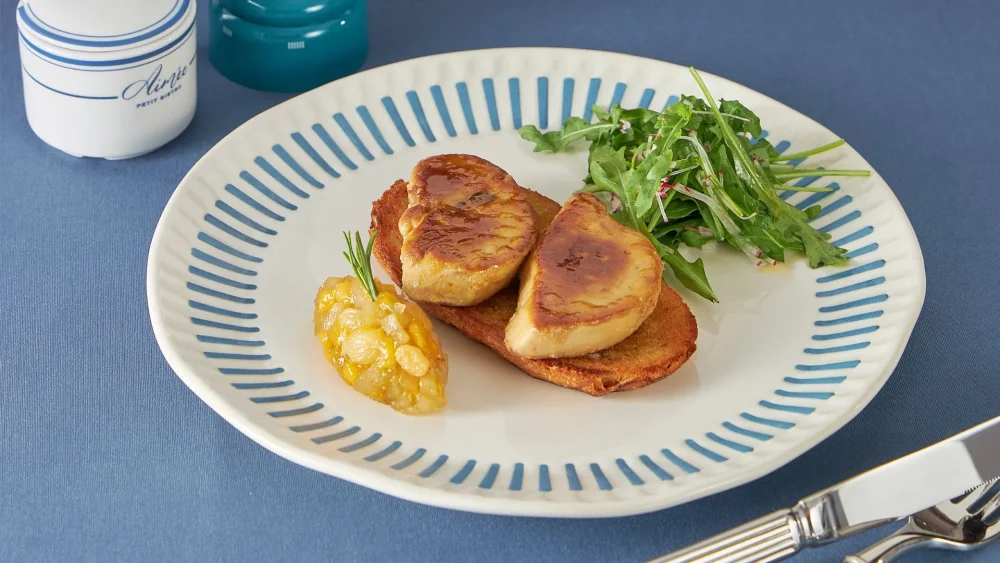
Experience the Signature Foie Gras Poêlé at Aimée Petit Bistro Rangsit
If you are looking for an exceptional Foie Gras experience without traveling into the city center, Aimée Petit Bistro Rangsit offers a dish that rivals any French restaurant.
We select only premium duck Liver for its strong flavor and sear it to perfection, served with thoughtful curation of sides designed to cut through the richness:
- Homemade Green & Yellow Mango Chutney – This is our chef’s secret weapon. We cook green and yellow mangoes into a chutney. The acidity and sweetness of the mangoes cleanse the palate, cutting through the fattiness of the Foie Gras and making every bite refreshing.
- Grated Garlic Bread – Instead of plain toast, we serve grated garlic bread to add a savory crunch and aromatic depth that complements the liver.
- Arugula Salad – A side of fresh arugula adds a peppery bite and crisp freshness, rounding out the dish.
Whether you are a seasoned connoisseur or trying this delicacy for the first time, our Foie Gras Poêlé is crafted to impress.
Join us for a taste of Parisian bistro at Aimée Petit Bistro, located within Novotel Bangkok Future Park Rangsit. As a leading French restaurant in Rangsit, we are ready to make your next meal unforgettable. Whether you are looking for a French restaurant in Bangkok for a casual yet sophisticated lunch or the perfect place for a romantic evening, our bistro offers the ideal backdrop. You’ll discover that true joy at the table begins here.
Contact us
114 Phahonyothin Road, Prachathipat, Thanyaburi 12130, Pathum Thani, Thailand
Tel: 02-520-2525, 02-520-2526
Email: [email protected]
LINE OA: https://lin.ee/fpwEJ9sb (@novotelfuturepark)
Aimée Petit Bistro opens daily: 1:00-2:30 PM and 5:30-10:00 PM